Leadership & teams
How do we create the conditions for people to thrive?
Habits, trust, motivation and the everyday environments that influence how people lead and work together.
Explore this challenge
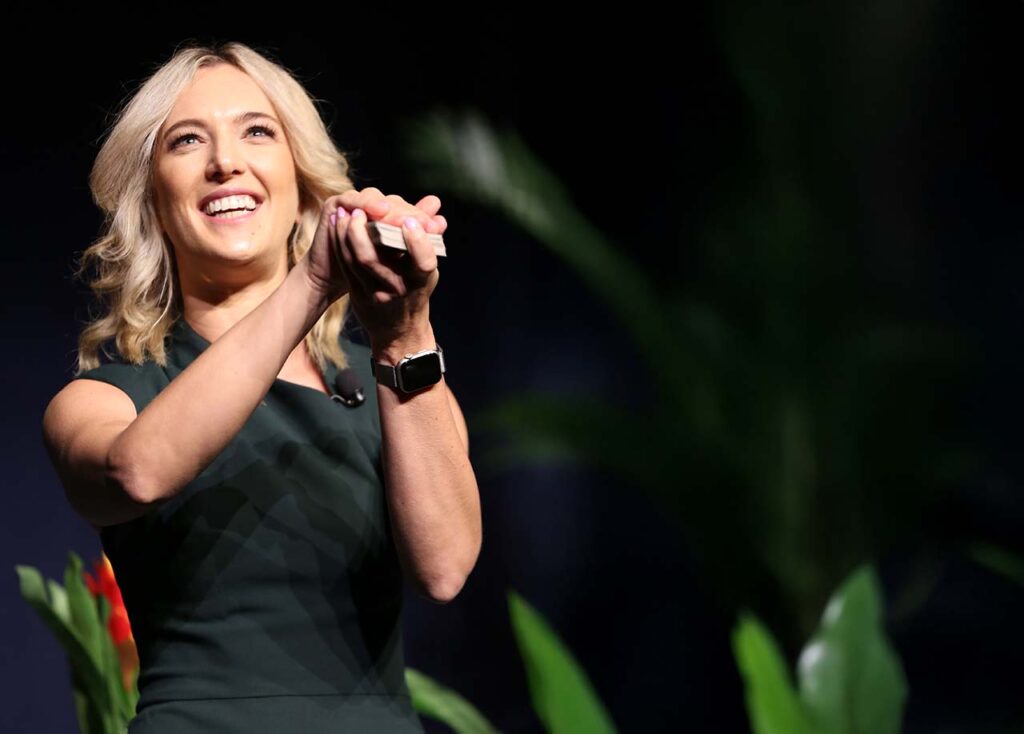
A scientist’s rigour. An explorer’s curiosity.
A storyteller’s way of making you see differently.
Experimental Psychology
Recognised for her work in science
Selected for the Antarctic women-in-STEM expedition

Dr Juliette Tobias-Webb · Director of Behavioural Science
A lifelong question
For Juliette, that question connects research laboratories, boardrooms, conference stages and Antarctica.
Her career has crossed academia, behavioural research, financial services, advertising, leadership development and emerging technology. Across those settings, one interest has remained constant: understanding people and the conditions that shape their choices.
Today, she brings that perspective to audiences and organisations as a behavioural scientist, keynote speaker and consulting partner. She makes the science of human behaviour fascinating, accessible and useful by connecting fresh thinking with the decisions people face in their work.
Whether she is opening a conversation about AI or helping a team examine a customer journey, Juliette starts with curiosity. What is happening? What is influencing it? And what could we design differently?
Explore the four perspectives she bringsWhat drives the work
Behavioural science belongs in the decisions, experiences and environments of everyday life. Juliette’s work connects the rigour of research with the possibility of practical change.
One person. Four perspectives.
Explore the qualities that connect Juliette’s science, storytelling and work with organisations.
The scientist
Juliette holds a PhD in Experimental Psychology from the University of Cambridge. Her work starts with understanding what shapes behaviour, examining the evidence and asking which assumptions need to be tested.
Scientific rigour makes the questions sharper and the next step more useful.
The explorer
Selected for Homeward Bound’s Antarctic women-in-STEM expedition, Juliette brings a spirit of exploration to her work. Stepping into unfamiliar environments opens up questions about leadership, collaboration and human potential.
That same curiosity invites audiences and organisations to look at familiar challenges from a fresh perspective.

The storyteller
Surprising research, human stories and humour make complex psychology accessible. Juliette connects the science to the decisions people recognise in their own lives and work.
The aim is a moment of recognition: a new way of seeing a familiar behaviour, and a practical idea to take away.

The changemaker
As Director of Behavioural Science, Juliette works with leaders, brands and technology teams on the decisions, journeys and environments that shape what people do.
Her approach connects understanding with behavioural design, practical experimentation and learning in the real world.
The questions she explores
Three connected fields, each asking what becomes possible when we understand people better.
Leadership & teams
Habits, trust, motivation and the everyday environments that influence how people lead and work together.
Explore this challengeCustomers & choices
The friction, information and influences that shape customer decisions, engagement and responsible experiences.
Explore this challengeHumans + AI
Adoption, confidence, critical judgement and the conditions for useful human–AI collaboration.
Explore this challenge


Bring her perspective to your organisation
A room to inspire or a business challenge to work through: choose the starting point that fits.

For event organisers & audiences
Keynotes, panels and workshops blend surprising science, stories and practical insights. Explore themes across leadership, customer choices and the human side of AI.
Explore speakingDiscuss your eventFor leaders, brands & technology teams
Strategic advisory, behavioural audits, design and tailored programs help teams examine what shapes behaviour and identify practical opportunities for change.
Explore consultingDiscuss your challengeFor event hosts & collaborators
A concise introduction for your event brief or internal conversation.
Dr Juliette Tobias-Webb is a behavioural scientist, keynote speaker and Director of Behavioural Science. With a PhD in Experimental Psychology from the University of Cambridge, she brings scientific rigour, curiosity and accessible storytelling to the human questions facing organisations. Her career spans research, financial services, advertising, leadership development and emerging technology. Recognised as a Superstar of STEM and selected for Homeward Bound’s Antarctic women-in-STEM expedition, Juliette makes complex psychology engaging and useful. She works across leadership, customer behaviour and human–AI collaboration, helping audiences see new possibilities and organisations explore practical change.
Juliette’s work connects the study of human behaviour with the decisions people make every day. Her background in experimental psychology informs an approach grounded in evidence, critical thinking and a willingness to test assumptions.
On stage, she combines surprising research, stories and humour to make science memorable. In consulting, she partners with leaders, brands and technology teams to examine the environments, systems and experiences that influence behaviour.
From leadership habits and customer journeys to AI adoption and human judgement, her work asks how a better understanding of people can help us design better conditions.
A few things you might be wondering
Both start with the science of human behaviour. Speaking introduces a fresh perspective and opens a conversation. Consulting applies that perspective to a defined organisational challenge through diagnosis, design and experimentation.
Juliette’s themes can be tailored around your audience, industry and the questions that matter to them. Share the event purpose, audience and timing through the speaking enquiry to explore the right fit.
Start with what you would like people to do, think or experience differently. You do not need a completed brief. The first conversation helps identify the challenge and whether advice, an audit, behavioural design or a workshop is an appropriate next step.
Curiosity is a good place to start